
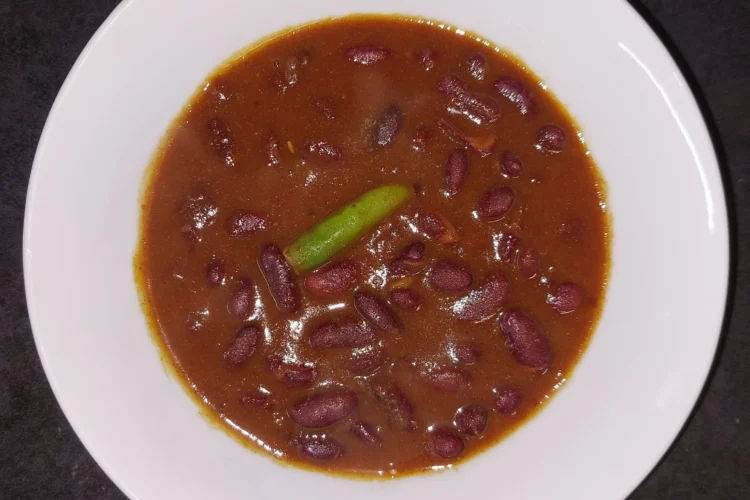
Rajma dal (kidney bean curry) is a hearty dish with a distinctively rich flavour profile. Its spicy, tangy, and umami taste, combined with its high fibre and protein content, make it a gratifying meal that is sure to satisfy the appetite.
As with many other curries, this dish works well with white rice or flatbread.
What is Rajma Dal?
Rajma dal is red kidney bean curry. The masala which forms the base for this curry consists of onions, garlic, and tomatoes, as well as spices such as red chilli, turmeric, coriander, and cumin.
To balance the earthy sweetness of kidney beans, we also add sour ingredients like lemon juice or anardana (pomegranate powder), which enhance the curry’s tanginess.
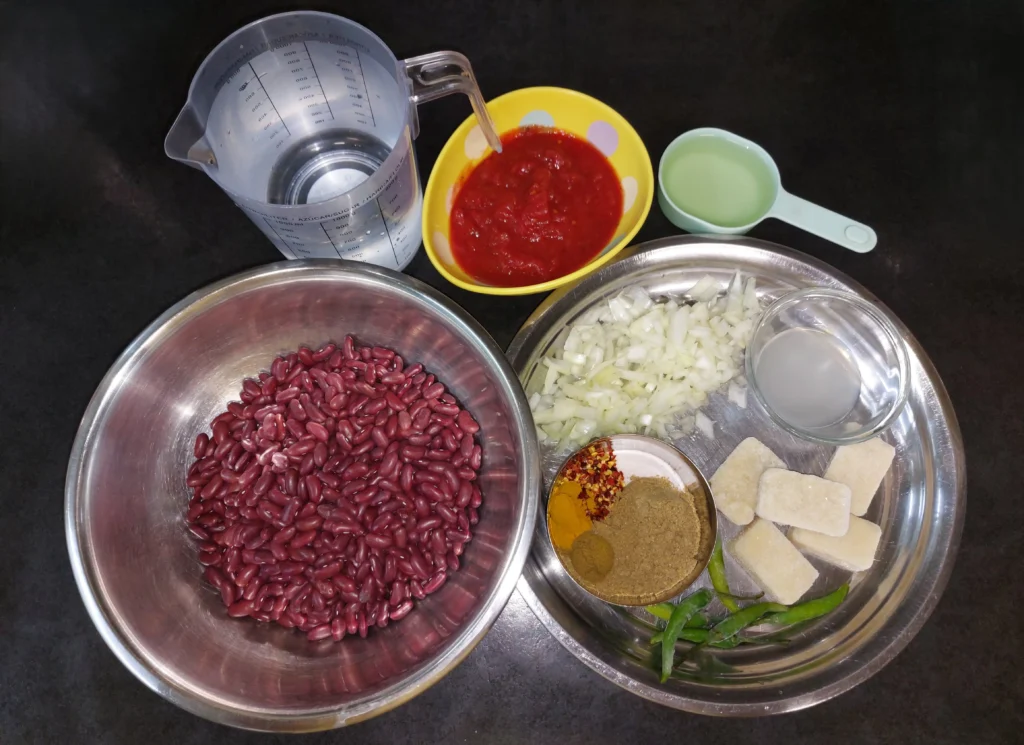
Kidney beans are high in lectins (a type of protein) and oligosaccharides (complex sugars) which some people may struggle to digest. For this reason, it’s important that the kidney beans are cooked properly.
Soaking the beans overnight or quick-boiling them before pressure-cooking not only shortens the cooking time of the beans, but also helps break down the compounds that may cause indigestion.
How I Learned to Cook Rajma Dal
Preparation
First, I washed the kidney beans before adding them to a pot with 1l of water.
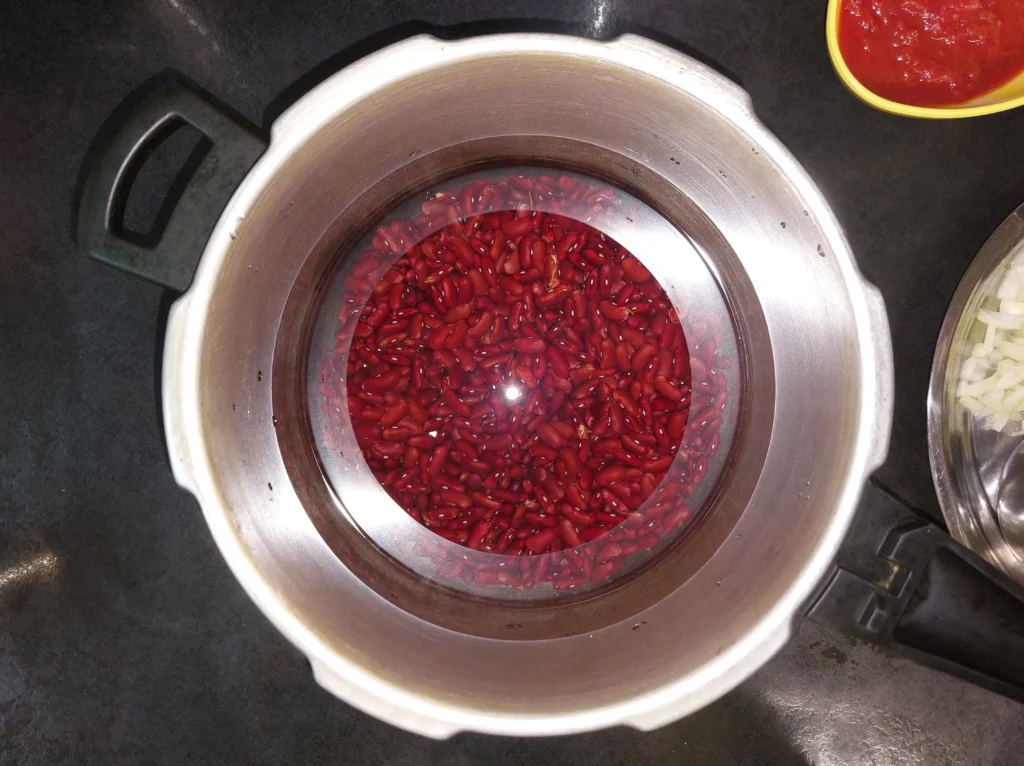
I then brought the water to a rapid boil, after which I boiled the kidney beans for 3 minutes.
This method of preparing beans before cooking is commonly known as the ‘quick-boil‘ method and reduces the need to soak the kidney beans overnight.
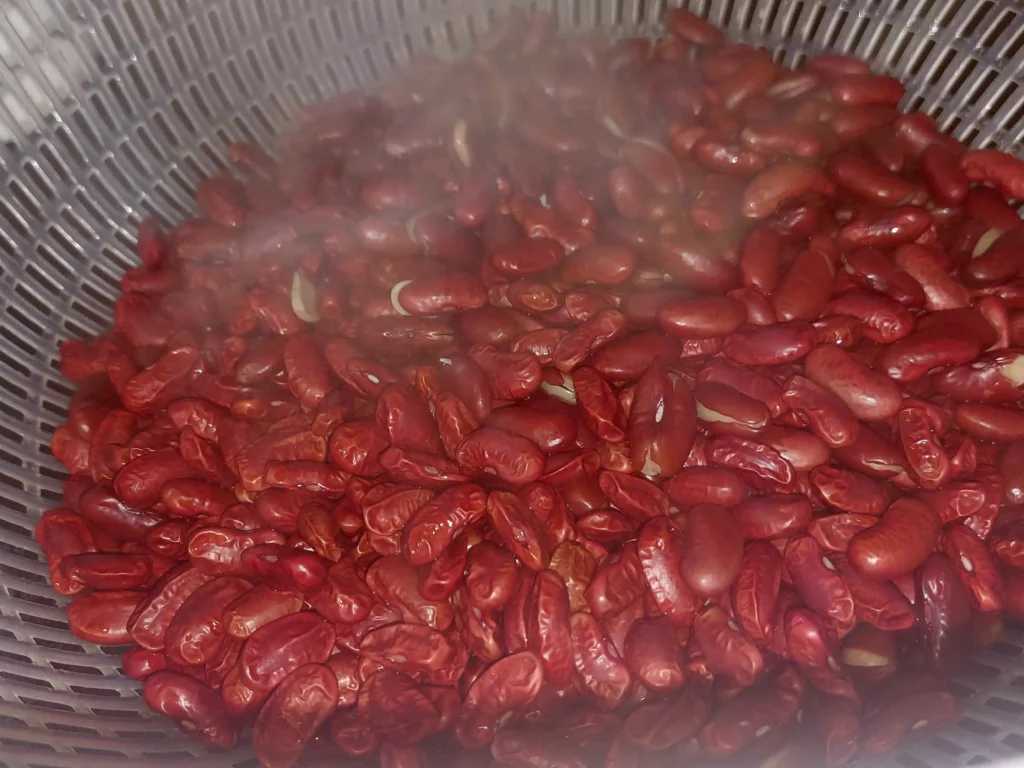
After boiling the kidney beans, I took the pot off the heat and drained them. I then left the beans in a colander to the side while I prepared the masala.
Making the Masala
I then diced the onion and sautéed it in a pot until it turned golden brown. When I noticed parts of the onion sticking to the bottom of the pot, I deglazed it with water.

When the onion turned golden brown, I added the frozen garlic cubes and allowed them to cook with the onion until they melted.
Once the cubes melted, I added tinned tomatoes and mixed.
I then added salt, red chilli powder, turmeric powder, ground coriander, ground cumin, and lemon juice.
Next, I mashed the masala with a food masher. I did not blend it because puréed masala is more likely to burn during pressure-cooking.
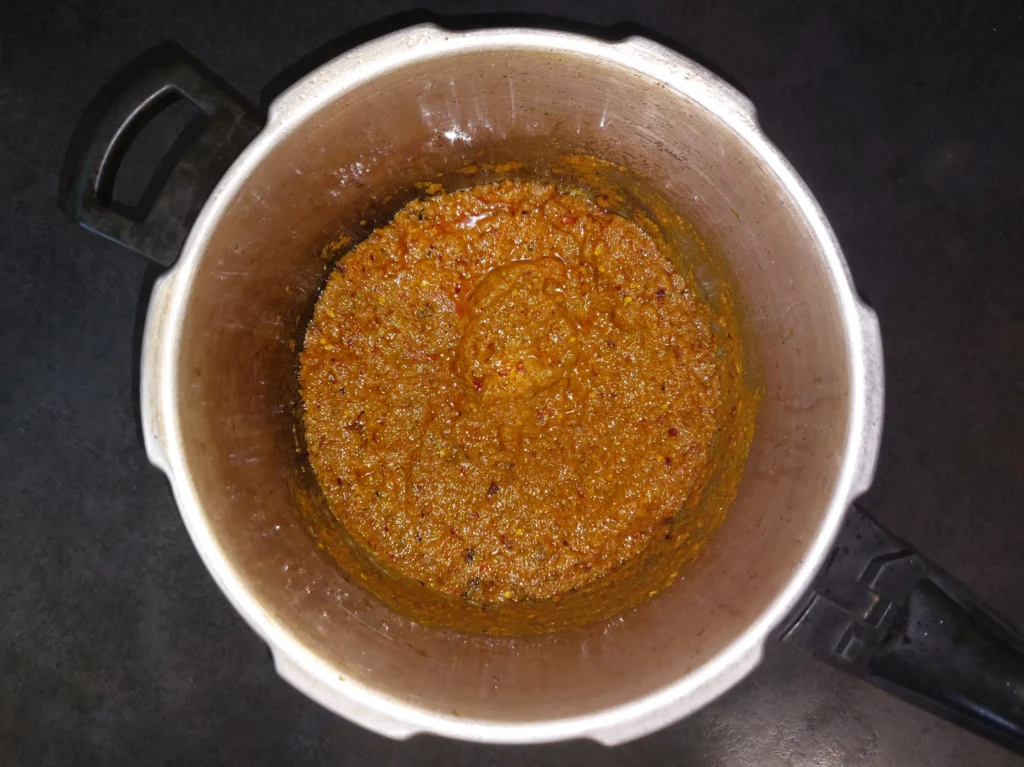
Cooking the Kidney Beans
When the masala was ready, I mixed in the kidney beans that I drained earlier.
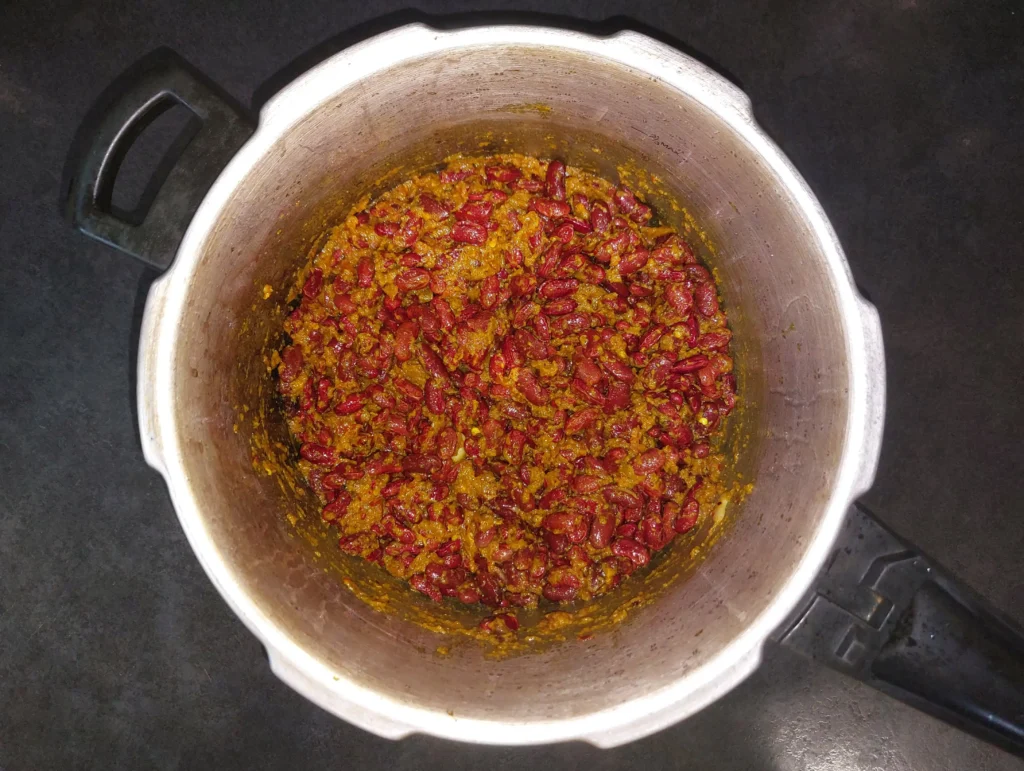
I then added 1.5l of water.
Next, I cooked the kidney beans in the pressure-cooker at high pressure on medium-high heat until it started whistling.
When the pressure-cooker started whistling, I lowered the heat and cooked the kidney beans for 50 minutes.
Then I took the pot off the heat and gradually released the steam before lifting the lid.
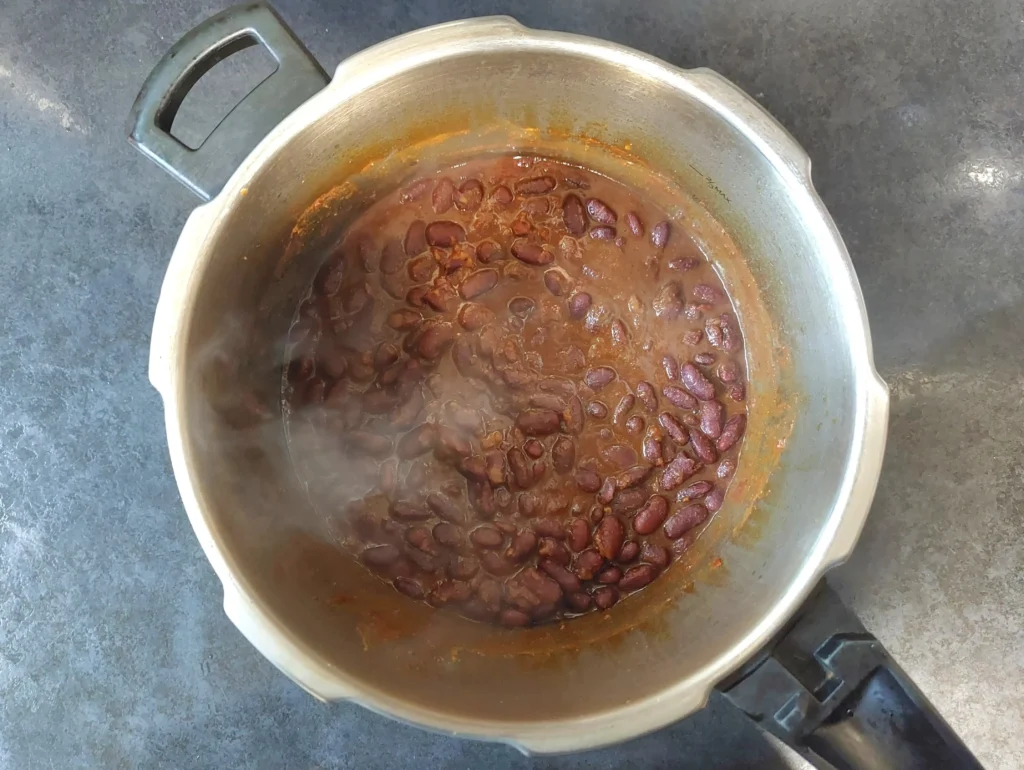
At this point, the kidney beans were still too firm and the curry was too dry, so I added 500ml of water and pressure-cooked the beans again. After it whistled, I cooked them for 10 more minutes.
Serving
Rajma dal (kidney bean curry) pairs well with white rice or flatbread.
What Has Rajma Dal Taught Me?
Using the pressure-cooker to soften the beans was a little challenging. The only other dish I’ve learned to cook so far which requires the pressure-cooker is whole masoor dal.
Dried kidney beans are tough and dense, so they require a longer (and more variable) cooking time than lentils, especially if they haven’t been soaked overnight beforehand.
I found that the beans were still firm after opening the pressure-cooker the first time, probably due to water loss. To improve this recipe, I’ll learn how to mitigate the amount of water lost during pressure-cooking so that I don’t have to cook them a second time.
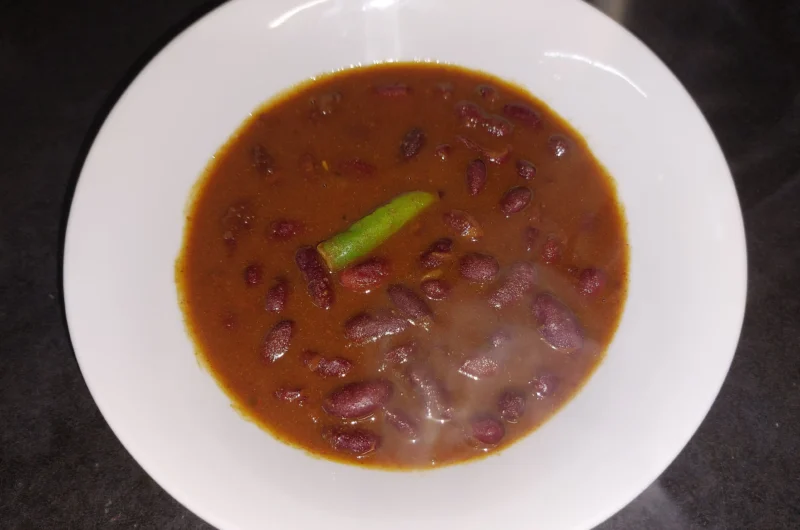
Rajma Dal (Kidney Bean Curry) | Beginner’s Attempt
Course: MainCuisine: South Asian, PakistaniDifficulty: Medium8
servings15
minutes1
hour15
minutesA hearty dish with a distinctively rich flavour profile. Its spicy, tangy, and umami taste, combined with its high fibre and protein content, make it a gratifying meal that is sure to satisfy the appetite.
Ingredients
Dried kidney beans (500g or 2.5 cups)
Yellow onion (Small x1)
Tinned tomatoes (200g or 3/4 cup)
Crushed garlic (25g frozen cubes x5)
Salt (2 tbsp)
Red chilli powder (1 tbsp)
Turmeric powder (2 tsp)
Ground coriander (4 tbsp)
Ground cumin (1 tsp)
Lemon juice (2 tbsp)
Water (3l)
Directions
- Preparation
- Wash the kidney beans.
- Add the kidney beans to a pot with 1l of water on medium heat. Bring the water to a rapid boil.
- Boil the kidney beans for 3 minutes.
- Take the pot off the heat and drain the kidney beans. Put to the kidney beans to the side.
- Making the Masala
- Sauté the onion in the pressure-cooker pot on medium heat until golden brown. Deglaze the pot with a splash of water when needed.
- Add the garlic cubes and allow them to cook with the onion until they melt.
- Add the tinned tomatoes and mix.
- Add the salt, red chilli powder, turmeric powder, ground coriander, ground cumin, and lemon juice and mix.
- Take the pot off the heat and mash the masala with a food masher. Do not blend it.
- Cooking the Kidney Beans
- Add the kidney beans to the masala in the pressure-cooker pot and mix.
- Add 1.5l of water.
- Cook the kidney beans in the pressure-cooker at high pressure on medium-high heat until it starts whistling.
- When the pressure-cooker starts whistling, lower the heat and cook for 50 minutes.
- Take the pressure-cooker off the heat and gradually release the steam before lifting the lid.
- If the kidney beans are still firm and the curry is too thick, add 500ml of water and pressure-cook again. After whistling, cook for 5-10 more minutes.
Notes
- If the kidney beans are still firm after pressure-cooking, add more water and pressure cook for 5-10 more minutes.